

Open your banking app and send someone money.
Count every screen between the thought and the confirmation. That number is the product.
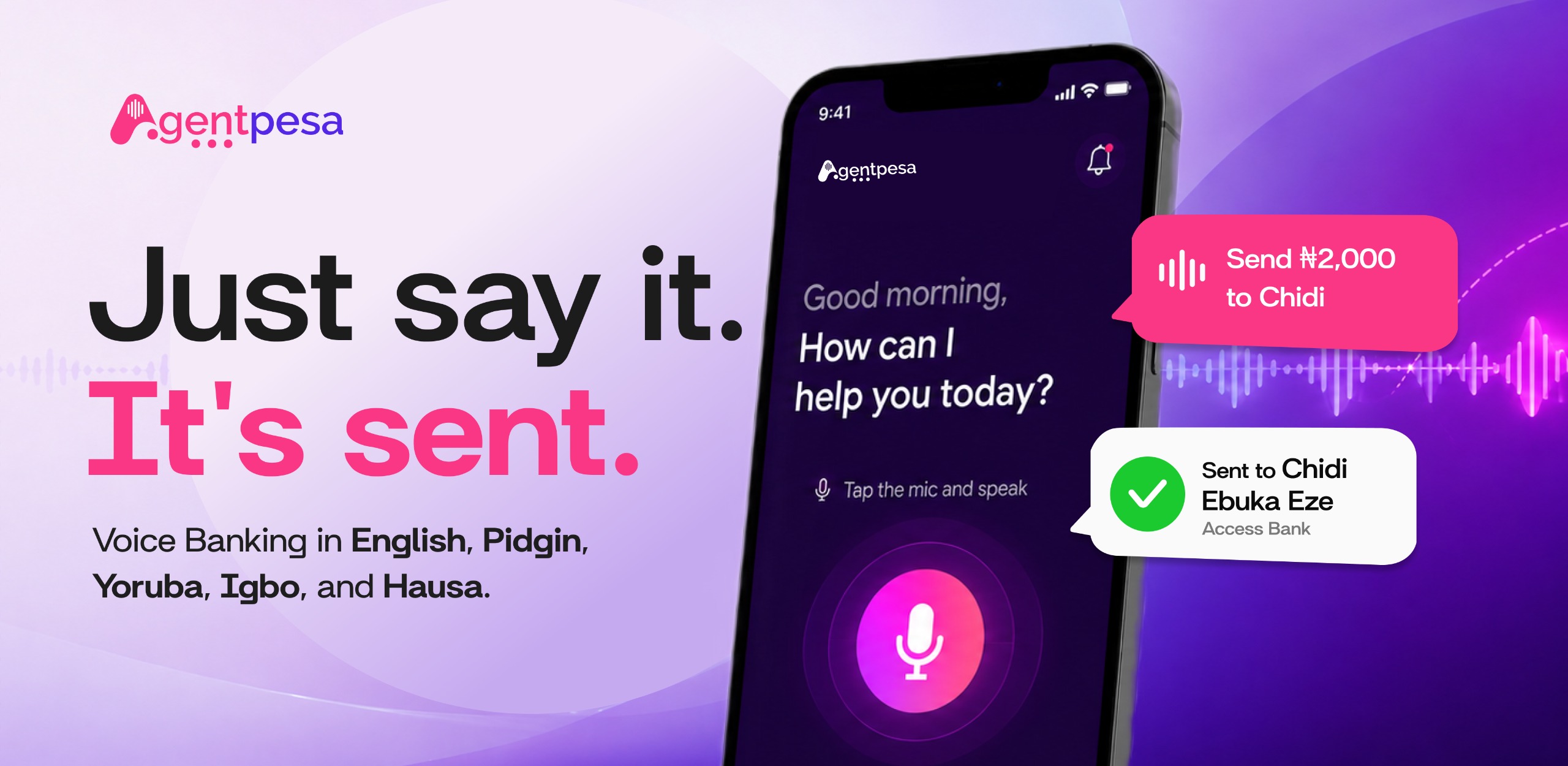
I was lying in bed when this landed. Not a whiteboard, not a strategy session — just the thought that I'd spent ten years building apps in this exact category and had never once questioned the shape of them.
Every banking app is a filing cabinet. Home screen, then a menu, then a category, then a form, then a confirmation. Five surfaces to express something you could have said in five words.
So we started measuring it. The number we care about internally isn't daily actives or session length. It's this:
How many taps between intent and done?CEO
For a transfer in a typical Nigerian banking app it's somewhere between seven and eleven, depending on whether the beneficiary is already saved. For us it's one sentence.
What this settles
Once taps are the metric, a lot of product arguments end early:
- A feature that adds a screen has to earn the screen
- Anything that can be inferred shouldn't be asked
- If someone has to learn where a thing lives, we've already lost them
None of this is really about voice. Voice is just the fastest input available right now. If something faster shows up, we'll use that instead — the commitment is to the distance between the thought and the money moving, not to the microphone.